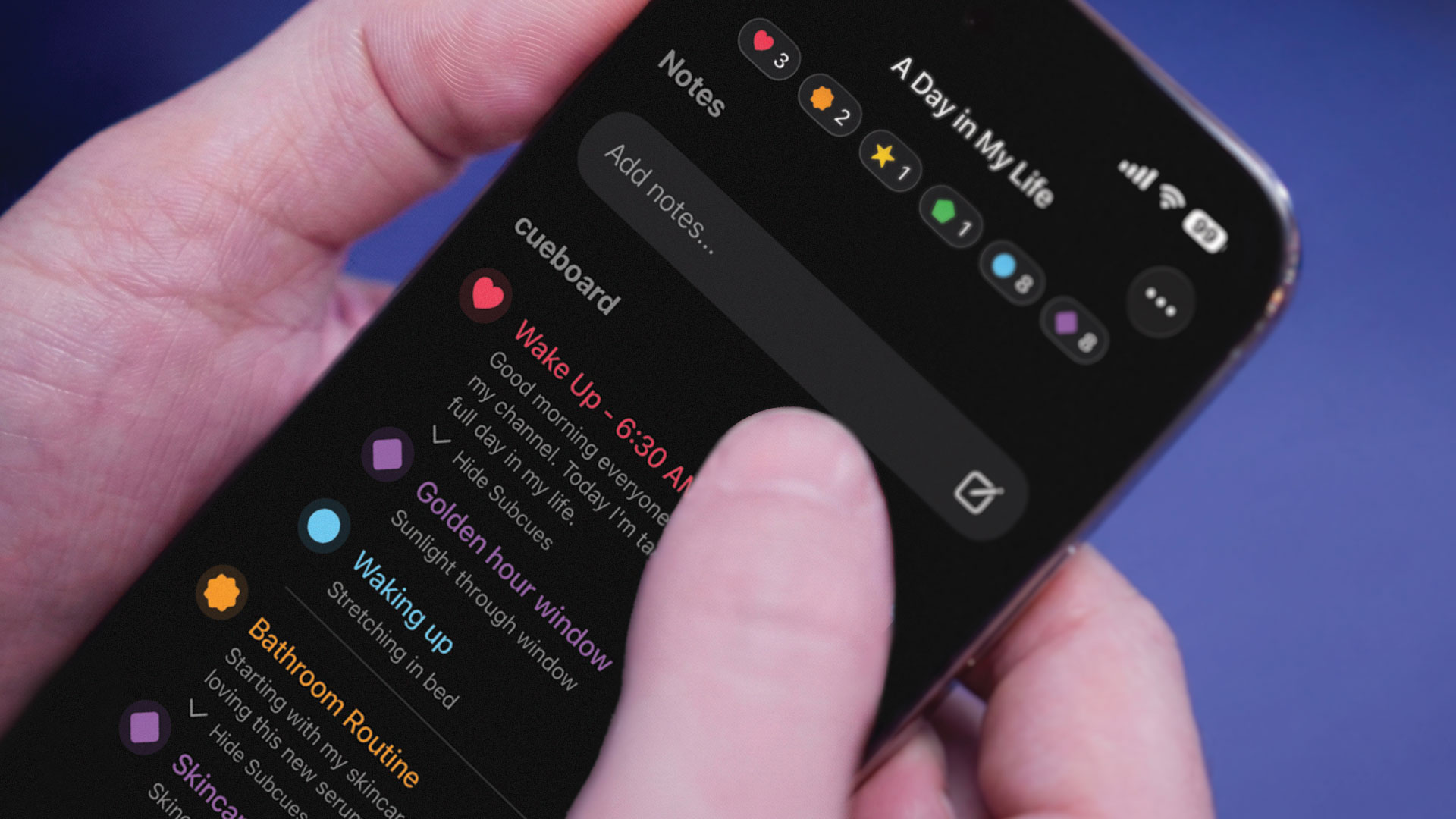
Ever watched a video that felt flat? You couldn't quite put your finger on it. The audio was fine, the lighting was decent, and the content was interesting. But something was missing. Nine times out of ten, the culprit is a lack of shot diversity.
Whether you're making 30-second TikToks or 20-minute YouTube tutorials, the variety in your shots is what keeps eyeballs on the screen. Let's break down why this matters, the science behind it, and how you can start applying it to your next project.
Why Shot List Diversity Matters
Human brains crave novelty. Research has shown that cuts in film editing reduce eyeblink frequency and increase attention, with scene changes triggering electrical activity from the visual cortex to cognitive processing areas. Our brains search for these "breaks" in the stream of visual information to process what we've seen.
"Spontaneous blinks were highly synchronized between subjects when they viewed the same short video stories... searching for an implicit timing that is appropriate to minimize the chance of losing critical information while viewing a stream of visual events." — Nakano et al. (2009)
Your brain literally wants to pay attention more because the cuts in a video are sending "reset" signals to keep it locked in. Blinking less means you're paying attention more. As legendary film editor Walter Murch puts it in In the Blink of an Eye, a blink, and a cut, is "punctuation that helps us make sense of reality rather than experiencing life as a long run-on sentence."
From the words of the Godfather trilogy's editor:
"The blink is either something that helps an internal separation of thought to take place, or it is an involuntary reflex accompanying the mental separation that is taking place anyway." — Walter Murch
How does this relate to your video? Well, a static, single-angle shot held too long will cause viewers to drift. But a well-timed cut to a new perspective? That's another "reset" signal that keeps them engaged.
Here's what happens when you lack shot list diversity:
- Short-form content: Viewers swipe away in under 2 seconds
- Long-form content: Retention graphs show steep drop-offs at predictable intervals
- Both formats: The algorithm notices, and recommends your content less
The good news? You don't need expensive gear or a film degree to fix this.
You just need a plan.
The Three Pillars of Shot List Diversity
Let's break shot list diversity into three core concepts that work for any type of planned content.
1. Vary Your Shot Types
Every type of shot communicates something different to your audience. When you mix them intentionally, you create a rhythm that guides the viewer through your story.
Here are the major shot types to think about:
| Shot Type | What It Communicates | When to Use It |
|---|---|---|
| Wide/Establishing | Context, location, scale | Openers, scene transitions |
| Medium | Balance of subject and environment | Dialogue, tutorials |
| Close-up | Emotion, detail, emphasis | Reactions, product details |
| Extreme Close-up | Intensity, intimacy | Key moments, dramatic effect |
| B-Roll | Visual texture, pacing support | Transitions, covering cuts |
The mistake most creators make is shooting everything in a single frame style (usually medium shots). Instead, challenge yourself: for every scene you plan, can you capture it from at least two different distances? Can you mix up the B-Roll used in this scene? Can you use different angles?
2. Mix Your Angles
Even within the same shot type, a change in angle adds visual interest. Consider these variations:
- Eye Level: The default. Feels natural and neutral.
- Low Angle: Makes subjects look powerful, heroic, or dominant.
- High Angle: Makes subjects look small, vulnerable, or overwhelmed.
- Dutch Tilt (Tilted Angle): Creates tension, unease, or stylized energy.
- Top Down (Bird's Eye): Perfect for cooking, unboxing, or workspace shots.
- POV: Puts the viewer in the subject's shoes.
These aren't just for Hollywood. A low-angle shot of your keyboard while you're typing? That's a vibe. A top-down of your art supplies before a project? That's an aesthetic. Angles are free upgrades to your content.
3. Control Your Pacing
Shot list diversity isn't just what you capture. It's how often you cut between shots. Pacing is the rhythm of your edit.
Fast pacing (cuts every 1-3 seconds):
- Creates energy, urgency, excitement
- Perfect for intros, hype content, transitions
- Risk: can feel chaotic if overused
Slow pacing (shots held 5-10+ seconds):
- Creates calm, focus, weight
- Great for emotional moments, explanations, beauty shots
- Risk: can feel boring without strong visuals
The key is contrast. A video that stays at one speed feels stagnant. But when you alternate between punchy sequences and breathing room, you create a viewing experience that feels complete.
The Blink Test
"Where you feel comfortable blinking — if you are really listening — is where the cut will feel right." — Walter Murch
As Walter Murch explains in In the Blink of an Eye, your instinct to blink while watching reveals natural cut points. If you're editing and feel like you could comfortably blink, that's your brain signaling it's time to cut. This isn't random, it's your subconscious recognizing when a visual idea has been fully absorbed.
Putting It All Together: The Pre-Production Advantage
Here's where planning changes everything. When you build your shot list before filming, you can intentionally design diversity into your content.
Instead of just writing "film the intro," you break it down:
- Wide establishing shot of location
- Medium shot of you walking into frame
- Close-up of your face for the hook
- B-Roll of the product or topic on a table
- Quick POV of your hands picking it up
Suddenly, your intro goes from a single static shot to a dynamic five-shot sequence in the first 10 seconds. That's the difference between amateur and professional-looking content.
Making It Work for Your Workflow
Every creator has a different style. Maybe you're a travel vlogger and need location-heavy shots. Perhaps you're a cooking creator who lives in top-down mode. Or you might be a talking-head educator who relies on cutaways to graphics and slides.
This is where flexibility in your planning tool matters. The standard categories (video, photo, drone, location, graphics) get you started, but your workflow is unique.
Say you're a makeup artist. Your shot types might include "Skin Prep," "Product Swatch," "Before/After," and "Final Look." Those aren't in any generic template, but they're essential to how you work.
In Cueboard, you can create a shot list with custom cue types to match any workflow. Head to Settings and define your own categories with custom names, shapes, and colors. Or, if you're in the middle of building a shot list and realize you need a new type, you can create one inline directly from the cue type picker or with a keyboard using Cmd + Shift + A. No context switching. No breaking your creative flow. Our How To Guide will get you started with custom cue types.
This flexibility means your shot list speaks your language, whether you're planning a short-form vertical video or a feature-length documentary.
Quick Tips for Better Shot List Diversity
Before you head into your next shoot, keep these in mind:
MrBeast's retention formula: In his recent $1 vs $1,000,000,000 Futuristic Tech video, the intro cuts every 2.5 seconds on average, but the real magic is in the pacing contrast. The opening establishes context with 3-4 second shots, then accelerates to a blistering 1.2 to 1.5 seconds per cut during the hook, before settling back to longer shots for the payoff. That rhythm variation is what maintains tension without overwhelming viewers.
For Short-Form (TikTok, Instagram Reels, YouTube Shorts):
- Front-load your diversity. The first 3 shots matter most.
- Use hard cuts between drastically different angles. It feels punchy.
- Consider "match cuts" where movement continues across different shots.
- Plan at least 2-3 different angles for your hook.
For Long-Form (Documentaries, Reviews, Vlogs, etc):
- Pace your B-Roll to avoid visual fatigue.
- Establish new sections with wide shots before going into details.
- Use close-ups to emphasize key points or calls to action.
- Mix static shots with subtle camera movements (handheld, slider, gimbal, pan).
For Both Formats:
- Always capture everything on your shot list. Cueboard can help you keep track of this, so you don't miss anything.
- Group your shots by location during filming to save time on set.
- Review your favorite creators and count their cuts. You'll be surprised how often they switch angles.
The Bottom Line
Shot list diversity is the difference between "watchable" and "can't look away." It's not about having fancy equipment or knowing complex cinematography terms. It's about being intentional with variety: in your shot types, your angles, and your pacing.
The creators who stand out are the ones who plan for this before they hit record. A solid shot list that accounts for diversity will save you time on set, give you more options in the edit, and result in content that holds attention from start to finish.